
Beginners Guide to Sensual Mindfulness Exercises (2026)

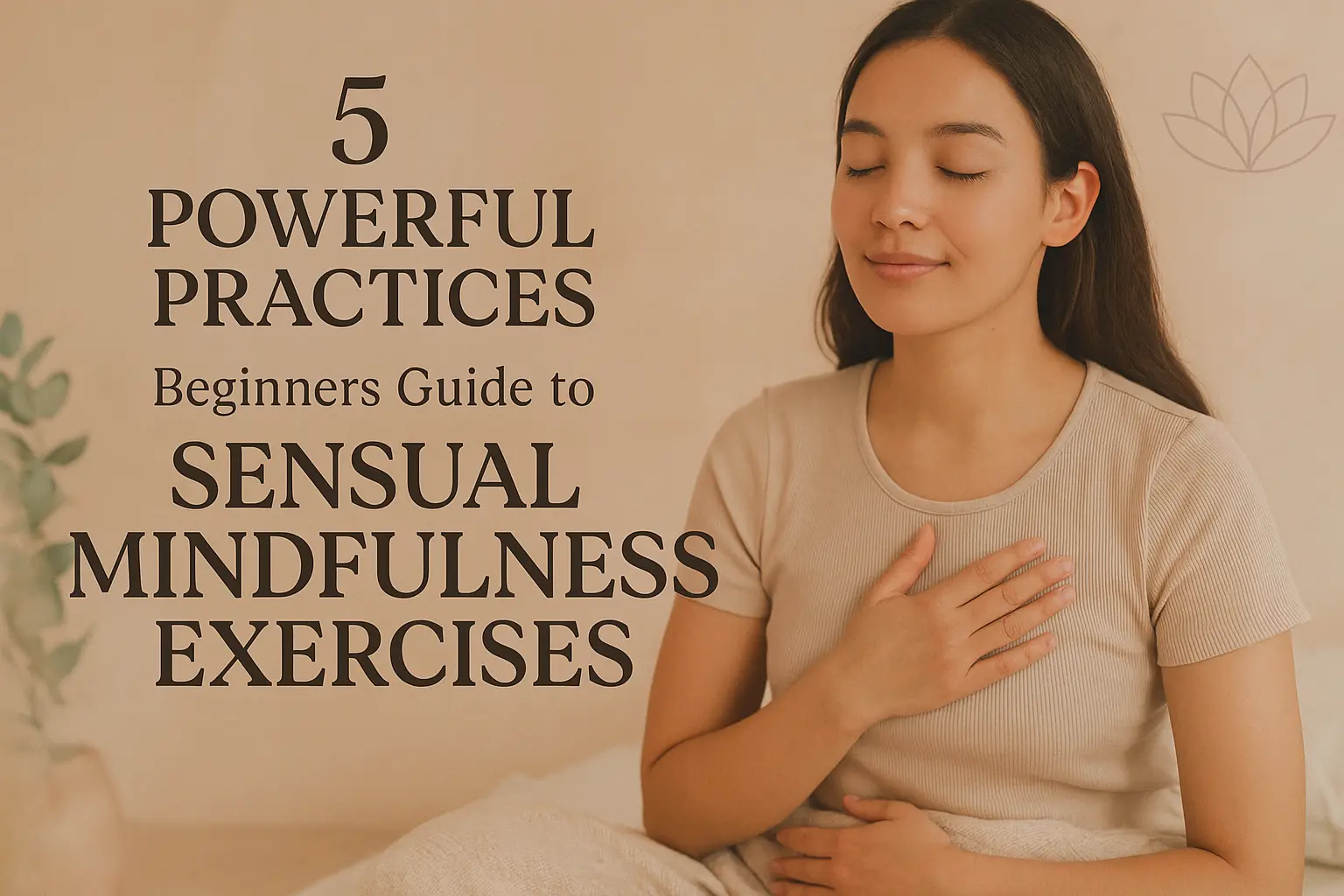
A calm, serene woman practicing mindfulness with hands on her chest and abdomen in soft natural light, representing the essence of the Beginners Guide to Sensual Mindfulness Exercises.

Why Most of Us Live in Our Heads Instead of Our Senses

Let’s be completely real for a moment. When was the last time you were fully, unapologetically present in your body during an intimate moment? Not half-thinking about tomorrow’s grocery run, not mentally rewriting a work Slack message, and definitely not stressing over whether your stomach looks flatter from a certain angle—but truly, deeply feeling the skin you live in? If you’re struggling to remember, trust me: you are far from alone. In my experience working with people navigating intimacy roadblocks, this disconnect is hands down the single most common frustration people share.

Modern life treats our bodies like glorified vehicles whose only job is to carry our overworked brains from one meeting to the next. By the time we collapse into bed at night, our nervous systems are humming with leftover caffeine, screen fatigue, and low-grade anxiety. And then we wonder why turning on physical desire feels like trying to start a car with an empty battery! That is exactly why this beginners guide to sensual mindfulness exercises exists. Sensual mindfulness isn’t about becoming a zen monk or spending hours in silent meditation. Instead, it’s a gentle, down-to-earth way to guide your attention back home to your nerve endings, wake up your senses, and experience physical pleasure that feels rich, effortless, and deeply satisfying.

What Is Sensual Mindfulness? (And How It Differs From Meditation)

Before we jump into the practices, let’s clear up what sensual mindfulness actually means—and what it definitely isn’t. When people hear the word ‘meditation,’ they usually picture sitting cross-legged on a hard floor, fighting off restless thoughts, and trying to achieve absolute mental silence. Sounds exhausting when you’re already tired, right? Sensual mindfulness is the exact opposite of that sterile image.

In this beginners guide to sensual mindfulness exercises, mindfulness is simply defined as paying curious, non-judgmental attention to physical sensations as they unfold in the present moment. Rather than trying to escape your thoughts, you drop beneath them into your sensory landscape:

  • Tactile Interoception: Feeling the temperature of your skin, the brush of soft cotton against your ribs, or the gentle pulse in your wrists.
  • Auditory Immersion: Tuning into the slow rhythm of your breathing, the hum of room ambiance, or your partner’s soft sigh.
  • Olfactory Grounding: Inhaling the comforting scent of clean skin, botanical oils, or ambient beeswax.
  • Zero Performance Pressure: Letting go of the unspoken expectation that sensual touch must lead anywhere—no required timeline, no mandatory escalation, and no goal of orgasm.

By removing the finish line, practicing through this beginners guide to sensual mindfulness exercises allows you to savor the journey itself. You stop performing intimacy and start genuinely living it.

5 Core Sensual Mindfulness Exercises Every Beginner Should Know

If you’re eager to start but don’t know where to place your hands or focus your attention, having a practical roadmap makes all the difference. As part of this comprehensive beginners guide to sensual mindfulness exercises, here are five foundational practices designed to gently reawaken your sensory awareness from the ground up:

  1. Conscious Diaphragmatic Breathwork: Slow belly breathing that expands your lower abdomen on the inhale and releases unconscious pelvic floor tension on each exhale.
  2. Non-Demand Sensate Focus: Gentle, explorative touch focused entirely on textures and temperatures, completely stripping away sexual expectations.
  3. Interoceptive Body Scanning: Mentally tracing your awareness from your toes to your scalp, noticing warmth, tingling, and subtle energetic currents without judging them.
  4. Multi-Sensory Texture Exploration: Introducing contrasting fabrics—like raw silk, cool linen, and velvet—across sensitive areas of skin to recalibrate tactile nerve endings.
  5. Attuned Partner Presence: Sitting softly together, synchronizing breath, and practicing non-verbal emotional attunement through soft eye gazing.

5 Core Sensual Mindfulness Exercises for Beginners Infographic

You don’t need to tackle all five at once. Pick just one or two exercises that feel inviting, and give yourself full permission to explore them at your own relaxed pace.

The Neurobiology of Sensory Presence: How Mindfulness Awakens Libido

Here is something truly empowering: your struggles with intimacy aren’t a personal failure—they are a predictable biological response to stress. In 2026, cutting-edge neurobiology and polyvagal theory have shown that when our sympathetic nervous system is stuck in chronic overdrive, our bodies pump out cortisol and adrenaline. From an evolutionary perspective, your brain thinks you’re being chased by a predator. Naturally, blood circulation is diverted away from the pelvic organs toward large muscles, numbing physical sensation and putting libido on pause.

Practicing sensual mindfulness flips that biological switch. According to a landmark study on mindfulness-based sex therapy published in Current Sexual Health Reports (PMC6640099), consistent sensory awareness activates the vagus nerve and triggers the parasympathetic ventral vagal state—the body’s natural state of safety, connection, and restorative pleasure. Furthermore, neuroimaging shows that mindful touch quiets the brain’s Default Mode Network (DMN), the exact circuit responsible for overthinking, body anxiety, and harsh self-criticism.

This insight is central to our beginners guide to sensual mindfulness exercises. When the DMN quiets down, your brain’s insula lights up, dramatically increasing tactile sensitivity. This process aligns seamlessly with modern models of responsive desire: when your nervous system feels genuinely safe and unhurried, your physical appetite awakens naturally from the inside out.

Solo Sensual Mindfulness: Reconnecting with Your Own Body First

In this part of our beginners guide to sensual mindfulness exercises, let’s explore how to reconnect with your own body first. While sharing intimacy with a partner is wonderful, starting your practice solo is often the kindest, most effective approach. When you’re on your own, there’s zero anxiety about what someone else is thinking, how long you’re taking, or whether you look attractive. You get to be entirely selfish in the best possible way.

Serene woman practicing sensual mindfulness exercises with hands on chest and belly

To begin a solo session, set aside just ten quiet minutes. Dim the overhead lights, set your phone in another room, and lie down comfortably. Place one warm palm over your sternum and the other over your lower belly. Close your eyes and feel the rise and fall of your abdomen for three slow breaths. From there, let your fingertips trace your collarbones, the curve of your ribcage, or the tops of your thighs with feather-light curiosity.

If you’d like an audio companion to guide your rhythm, try pairing this with our dedicated routine on guided sex meditation for women. You can also explore low-pressure solo touch through our breakdown of outercourse and nonpenetrative sex benefits, creating a deeply nurturing foundation of self-trust.

Sensate Focus for Couples: Reviving Physical Intimacy Without Pressure

Another foundational pillar in our beginners guide to sensual mindfulness exercises is adapting Sensate Focus for couples. If you share your life with a partner, bringing sensual mindfulness into your relationship can feel like opening a window in a stuffy room. Decades ago, legendary sexologists Masters and Johnson pioneered ‘Sensate Focus’—a structured touching exercise designed to cure performance anxiety. Modern relationship coaching in 2026 has refined this into an intuitive, emotionally rich practice that couples love.

Here is how a beginner couple can practice Sensate Focus at home:

  • Phase 1 (The Non-Genital Agreement): Both partners agree beforehand that breasts and genitals are strictly off-limits. One partner lies down comfortably while the other explores touching their back, arms, feet, and neck for 15 minutes, focusing purely on texture and warmth.
  • Phase 2 (Role Reversal): Switch roles without rushing. The receiving partner focuses entirely on absorbing sensations, while the touching partner focuses on the tactile feeling of their partner’s skin under their hands.
  • Phase 3 (Curious Feedback): After both rounds, spend two minutes sharing what felt surprising or soothing.

Following this structure removes the heavy unspoken expectation of intercourse. This exercise is one of the most reliable ways to rebuild playful intimacy and sustain desire in long term relationship partnerships that have drifted into predictable routines.

Overcoming the ‘Spectatoring’ Trap: Quieting Self-Criticism in Bed

Have you ever had an intimate moment where you felt like you were floating above the bed, critically observing yourself like a harsh movie director? “Are my arms flabby in this angle? Is my face making a weird expression? Am I taking too long?” In clinical psychology, this toxic mental loop is known as ‘spectatoring.’

Spectatoring pulls all your blood and attention right into your prefrontal cortex, completely stripping your body of erotic pleasure. A core breakthrough highlighted in this beginners guide to sensual mindfulness exercises is learning how to dismantle that spectator mirror the instant it appears.

When you catch yourself spectatoring, use the ‘5-4-3-2-1 Sensory Anchor’ trick:

  • Notice 5 physical contact points between your skin and the sheets.
  • Tune into 4 distinct textures (the cotton pillow, your partner’s hair, your own fingernails).
  • Identify 3 gentle sounds in the room.
  • Detect 2 ambient scents (fresh air, lotion).
  • Take 1 deep belly breath and let your jaw go completely slack.

This simple somatic reset interrupts self-critical rumination and pulls your awareness right back into your senses where it belongs.

Enhancing Your Practice with Texture, Temperature, and Sensory Toys

As you progress through this beginners guide to sensual mindfulness exercises, you can begin introducing subtle sensory tools to enrich your tactile sensations. Your skin has millions of diverse nerve receptors that respond differently to heat, cold, smooth surfaces, and rhythmic pulsation.

Here are a few sensory enhancements worth experimenting with:

  • Temperature Play: Gently glide a smooth, polished ice cube along the nape of the neck or down the spine, followed immediately by warm, slow exhales or heated jojoba body oil. The stark thermal contrast awakens dormant neural pathways.
  • Contrasting Textures: Use a goose-feather wand, a silk scarf, or a textured waffle towel to brush lightly over inner arms, backs of knees, and shoulders.
  • Rhythmic Pulsation Devices: If you choose to introduce intimate devices into your mindfulness routine, look for tools that emphasize gentle, air-pulse waves rather than harsh, buzzy vibrations. Incorporating tools from our curated clit suction vibrator guide allows you to explore non-contact stimulation that complements slow diaphragmatic breathing without overwhelming your nervous system.

Remember: tools are sensory amplifiers, not finish-line shortcuts. Use them mindfully to enrich your somatic curiosity.

How to Navigate Body Insecurities and Hormonal Shifts with Mindfulness

Navigating body changes with grace and patience is a central lesson of this beginners guide to sensual mindfulness exercises. Bodies change. Whether you are dealing with postpartum recovery, fluctuating thyroid health, chronic fatigue, or perimenopause, our bodies rarely stay identical throughout adulthood. When bodily shifts occur, many people pull away from touch altogether because their physical self no longer feels familiar.

This is where practicing mindful presence becomes deeply therapeutic. Rather than fighting your body or mourning how it used to feel ten years ago, sensual mindfulness invites you into ‘body neutrality.’ You don’t have to force yourself to feel overwhelming body positivity every second; instead, you simply appreciate that your body is a living, breathing vessel worthy of care, comfort, and warmth.

If you’re navigating midlife biological transitions, learning to adapt your sensual routines can be life-changing. Be sure to read our comprehensive insights on understanding menopause and libido changes naturally to support your hormones with grace and compassion.

Communicating Your Sensual Discoveries with Your Partner

The final practical bridge in our beginners guide to sensual mindfulness exercises is translating your discoveries into open conversation. As you practice, you will uncover delightful revelations about what truly makes your body tick. Maybe you discover that you adore firm foot massages before any intimate touch, or that you prefer ten minutes of slow breathing before anything else happens. But how do you share these insights with your partner without feeling awkward?

The secret is positive framing and shared curiosity. Instead of saying, “You never give me enough time to warm up,” reframe it as an exciting personal realization: “I’ve been practicing these sensual mindfulness exercises, and I realized my body feels ten times more receptive when we start with slow back strokes. Would you want to try that with me tonight?”

Opening up about desires builds tremendous emotional intimacy. For practical scripts and compassionate strategies on voicing your needs, explore our detailed guide on how to talk about sexual preferences with partner dynamics without defensiveness.

Frequently Asked Questions About Sensual Mindfulness Exercises

1. How do I start using this beginners guide to sensual mindfulness exercises if my mind won’t stop racing?
Don’t worry if your mind wanders—that is completely normal for everyone! The goal of sensual mindfulness isn’t to force an empty mind, but to notice when you’ve drifted and gently escort your attention back to a physical anchor, like the temperature of your skin or the steady rhythm of your breathing.

2. Can a beginners guide to sensual mindfulness exercises help if I struggle to reach orgasm?
Yes, remarkably so. Most orgasm difficulties stem from performance pressure, spectatoring, and sympathetic nervous system arousal. Following a beginners guide to sensual mindfulness exercises teaches your body to drop into the parasympathetic ‘rest-and-pleasure’ state, releasing pelvic tension and making natural climax much more accessible.

3. How long should I spend on this beginners guide to sensual mindfulness exercises routine?
You don’t need hours of free time. Starting with just 5 to 10 minutes two or three times a week creates measurable neurobiological benefits. Consistency and unhurried presence matter infinitely more than session duration.

4. Do practices in this beginners guide to sensual mindfulness exercises have to lead to intercourse?
Absolutely not! In fact, the exercises are most potent when intercourse is explicitly off the table. Treating sensual mindfulness as an end in itself allows you to cultivate pure sensory pleasure without the weight of expectations.

5. Can couples with mismatched libidos benefit from this beginners guide to sensual mindfulness exercises?
Yes, it is one of the best tools available for mismatched sex drives. Because this beginners guide to sensual mindfulness exercises emphasizes non-demand touch and emotional connection, the lower-desire partner feels safe from unwanted escalation, while the higher-desire partner receives nurturing physical closeness.

Final Thoughts: Making Sensual Presence Your Everyday Superpower

At the end of the day, working through this beginners guide to sensual mindfulness exercises is so much more than a bedroom technique. It is a quiet, radical act of reclaiming your right to inhabit your body with joy, confidence, and peace. In a noisy world that constantly pulls your attention outward, turning your awareness inward is the greatest gift of self-care you can offer yourself.

Remember that there is no ‘perfect’ way to practice. Some days you will feel deeply connected, and other days your mind will feel noisy and scattered. That’s okay. Treat your body with patience, approach every sensation with childlike curiosity, and celebrate the courage it takes to slow down. Pleasure is not a prize to be earned—it is your natural biological birthright. Take a deep breath, soften your shoulders, and welcome yourself home.