
There’s a conversation happening quietly in women’s group chats, Reddit threads, therapist offices, and late-night talks between partners.
It usually starts with a sentence like this:
“I thought it was just me.”
Maybe sex started feeling less exciting after beginning birth control.
Maybe your libido slowly disappeared.
Maybe your body stopped responding the same way it used to.
And honestly? That can feel confusing as hell.
Because nobody really prepares women for this part.
We’re taught that contraception prevents pregnancy. We hear about possible headaches, nausea, mood swings, or spotting. But conversations about pleasure? Desire? Orgasm changes? Vaginal dryness?
Those topics often get brushed aside.
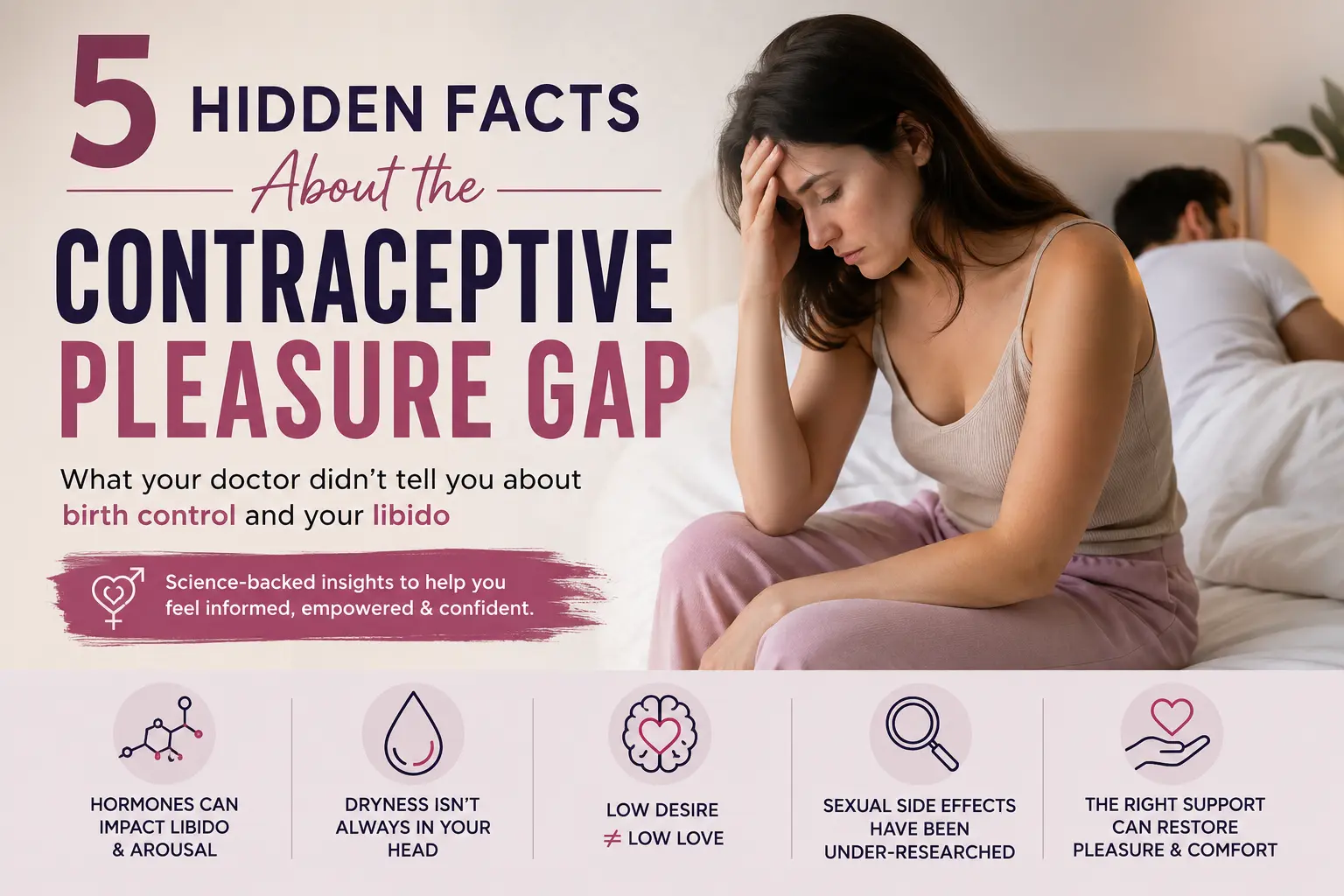
That disconnect has a name now: the contraceptive pleasure gap.
And the more researchers study female sexual wellness, the clearer it becomes that many women have been experiencing very real, biological sexual side effects for years without proper validation.
Let’s talk about it openly.
No shame. No fear-mongering. Just honest, science-backed conversation.
Table of Contents
What Is the Contraceptive Pleasure Gap?
The contraceptive pleasure gap refers to the difference between the reproductive benefits of contraception and the unintended sexual side effects some users experience.
In simple terms?
Birth control may help prevent pregnancy while simultaneously affecting:
Not everyone experiences these effects.
That’s important.
Some women feel completely normal on hormonal birth control. Others even report improved sex lives because reduced pregnancy anxiety helps them relax more during intimacy.
But for many people, the experience is more complicated.
A growing body of sexual health research suggests that contraceptive dissatisfaction is often tied not just to physical side effects—but also to changes in pleasure and sexual well-being.
And for a long time, those concerns weren’t taken seriously enough.
The Research Is Finally Catching Up
One thing I’ve noticed over the past few years is that women are becoming way more vocal about how contraception affects their quality of life—not just their fertility.
And science is finally paying attention.
A 2026 multi-center study published in Frontiers in Global Women’s Health explored the relationship between contraception and sexual well-being, finding that sexual health disruptions affect a large percentage of women across their lives. The study also highlighted that many women discontinue contraceptive methods because of unaddressed sexual side effects like diminished desire, lubrication changes, or reduced pleasure.
That matters because historically, contraceptive success was measured mostly by:
- effectiveness
- convenience
- pregnancy prevention
But sexual satisfaction?
Often ignored.
Another evidence-gap editorial available through PubMed Central discussed how women’s sexual health outcomes have historically been underrepresented or inconsistently studied in global healthcare research.
Here’s the paper:
PubMed Central Editorial on the Global Sexual Health Evidence Gap
Honestly, that explains why so many women have spent years feeling dismissed when they tried to talk about libido or pleasure changes connected to contraception.
The “It’s All in Your Head” Myth Needs to Die
Let’s clear this up immediately.
Yes, mental health affects libido.
Stress affects libido.
Relationship tension affects libido.
Exhaustion affects libido.
But hormonal shifts can absolutely affect sexual response too.
This isn’t imaginary.
Some hormonal contraceptives may influence:
- free testosterone levels
- estrogen balance
- vaginal tissue hydration
- cervical mucus production
- lubrication response
- pelvic blood flow
So if your body suddenly feels physically different after starting birth control?
That deserves attention.
Not dismissal.
One of the most frustrating things women hear is:
“Maybe you just aren’t attracted to your partner anymore.”
Sometimes that’s true.
But sometimes your hormones changed and your body literally doesn’t respond the same way physically.
Huge difference.
How Hormonal Birth Control May Affect Pleasure
Now, this part isn’t black-and-white.
Every body reacts differently.
But there are several ways hormonal contraception may contribute to the contraceptive pleasure gap.

1. Lower Libido
This is probably the most discussed issue.
Some users describe it as:
- never initiating sex anymore
- feeling emotionally disconnected from desire
- losing spontaneous arousal
- enjoying sex once it starts, but never craving it
One woman described it online perfectly:
“I still loved my partner. I just stopped feeling hungry for intimacy.”
That distinction matters.
Because reduced libido doesn’t automatically mean reduced love or attraction.
2. Vaginal Dryness and Reduced Natural Lubrication
This is a major one.
And honestly? It doesn’t get enough attention.
Hormonal changes can affect vaginal moisture and cervical mucus production, leading to:
- friction during penetration
- irritation
- discomfort
- less pleasurable stimulation
- difficulty reaching orgasm
Sometimes women assume they’re “not turned on enough.”
But dryness can also be biological.
That’s important to understand because shame makes everything worse.
3. Changes in Orgasm Intensity
Some women report orgasms feeling:
- weaker
- harder to reach
- less physically intense
- emotionally muted
Research into this area is still evolving, but many clinicians acknowledge that hormonal fluctuations may influence arousal pathways and genital sensitivity.
And honestly… when your body suddenly feels less responsive, it can mess with your confidence too.
4. Emotional Flattening
This one is harder to measure scientifically, but many contraceptive users describe feeling emotionally “flat.”
Not depressed exactly.
Just… dulled.
Less spontaneous.
Less excited.
Less connected to desire.
And when emotional energy changes, sexual energy often changes too.
Why Women Often Feel Ignored About This
Here’s the uncomfortable truth.
Historically, women’s sexual pleasure hasn’t been treated as a medical priority.
Pregnancy prevention? Important.
Menstrual regulation? Important.
Sexual enjoyment? Often treated as optional.
That imbalance is part of why the contraceptive pleasure gap exists in the first place.
A reproductive health editorial published in Frontiers in Reproductive Health argued that contraceptive outcomes should include overall quality of life and sexual well-being—not just pregnancy prevention metrics.
That shift in perspective is long overdue.
Because pleasure matters too.
Does Every Contraceptive Method Cause These Problems?
No.
And I really want to avoid fear-based messaging here.
Some women thrive on hormonal birth control.
Others don’t.
The experience is deeply individual.
Combined Birth Control Pills
Potential side effects for some users:
- lower libido
- vaginal dryness
- mood changes
- reduced sensitivity
But others feel perfectly fine.
Hormonal IUDs
Hormonal IUDs typically involve lower systemic hormone exposure than some pills, but some users still report:
- libido shifts
- dryness
- pelvic discomfort
Again—mixed experiences.
Progestin-Only Methods
Including:
- mini-pill
- implant
- injection
Some users experience noticeable sexual side effects, while others don’t notice any changes at all.
Copper IUD
Since it’s non-hormonal, it avoids hormone-related libido effects for many people.
But some users experience:
- heavier periods
- cramps
- pelvic discomfort
Every method has tradeoffs.
The Emotional Side of the Contraceptive Pleasure Gap
This part hits harder than people expect.
Because when your sexual response changes, it can affect:
- self-esteem
- relationships
- confidence
- body image
- emotional intimacy
And partners often misunderstand what’s happening.
A woman experiencing contraceptive-related dryness or reduced desire may still deeply love and desire her partner emotionally.
But if sex becomes uncomfortable or less rewarding physically, avoidance can happen naturally.
Not because the relationship is failing.
Because the body changed.
What Actually Helps? Practical Ways to Close the Contraceptive Pleasure Gap
Okay.
Now for the helpful part.
Because awareness alone isn’t enough.

1. Track What Changed
This sounds simple, but it’s incredibly useful.
Ask yourself:
- Did symptoms begin after starting contraception?
- Is the issue emotional, physical, or both?
- Is dryness the biggest issue?
- Has orgasm intensity changed?
- Do I still enjoy intimacy once it starts?
Patterns matter.
2. Stop Assuming You’re Broken
Seriously.
So many women internalize this experience as a personal failure.
But bodies respond differently to hormones.
That’s biology—not weakness.
3. Use Body-Safe Moisture Support
If vaginal dryness or friction is part of the issue, this can genuinely improve comfort and pleasure.
And no, there’s no shame in using lubrication support.
In my experience, many women wait way too long before trying a quality moisturizer because they think it somehow means they’re “failing” sexually.
Not true.
A premium water-based moisturizer can reduce friction, improve glide, and help intimacy feel pleasurable again—especially when hormonal contraception affects natural moisture levels.
One option that fits particularly well here is the LELO Advanced Performance Moisturizer F1L.
What I like about it for this topic specifically:
- water-based formula
- condom-safe
- glycerin-free
- paraben-free
- suitable for sensitive skin
- designed for long-lasting comfort without sticky residue
You can explore it here:
Another gentle option is the LELO Personal Moisturizer, which contains aloe vera and a pH-conscious formula designed for sensitive skin and toy compatibility.
You can check it out here:
Important note:
These products don’t “fix hormones.”
But they may absolutely help with comfort, dryness, and friction-related pleasure issues—which are common parts of the contraceptive pleasure gap.
4. Rethink Foreplay
This sounds obvious, but it matters.
If arousal takes longer now, trying to force your old sexual rhythm may create frustration.
Slow things down.
More teasing.
More kissing.
More mental stimulation.
More pressure-free touch.
Pleasure sometimes needs adaptation—not panic.
5. Talk Honestly With Your Healthcare Provider
This conversation matters.
And specificity helps.
Instead of saying:
“I don’t feel right.”
Try:
“Since starting this contraceptive, I’ve experienced lower libido, dryness, and less pleasurable orgasms.”
Those details make a huge difference.
6. Consider Alternative Contraceptive Options
For some women, switching methods improves sexual well-being significantly.
Potential adjustments may include:
- lower-dose pills
- non-hormonal methods
- copper IUDs
- alternative hormonal formulations
Never make changes blindly.
But don’t ignore persistent symptoms either.
What Partners Need to Understand
If you’re reading this as someone supporting a partner:
Please don’t interpret every libido change as rejection.
The contraceptive pleasure gap can be deeply biological.
Pressure usually makes things worse.
Curiosity and patience help far more.
The Bigger Conversation We Need to Have
Honestly?
Women deserve better conversations about contraception.
Not fear-based conversations.
Not anti-birth-control propaganda.
Just honest information.
People deserve to know:
- What might happen
- What’s normal
- What’s manageable
- What options exist
- When pleasure changes deserve medical attention
Because reproductive freedom and sexual well-being should coexist.
Not compete.
Your Pleasure Matters Too
If you take one thing away from this article, let it be this:
You are not selfish for caring about pleasure.
The contraceptive pleasure gap is real for many women, even if it doesn’t happen to everyone.
And acknowledging sexual side effects doesn’t make you “anti-birth control.”
It makes you informed.
Because intimacy isn’t just about avoiding pregnancy.
It’s also about comfort. Connection. Confidence. Desire. Feeling present in your own body.
And you deserve all of that too.